

Lot 60519636 · UT - SALT LAKE CITY
2017 DODGE CHARGER R/T 392
VIN 2C3CDXGJ8HH652854
Current bid
$8,900
≈ €8,241
 Archive
The vehicle
- Year 2017
- Make / model DODGE CHARGER
- Trim level R/T 392
- Body type Sedan/Saloon
- Condition SALVAGE TITLE (P)
- VIN 2C3CDXGJ8HH652854
- Drive type RWD/Rear-Wheel Drive
- Horsepower 485 к.с.
- Steering location Left-Hand Drive (LHD)
- Exterior color black
- Odometer 91,812 mi (147,757 km)
- Listing valid until 2026-07-31 21:00
Factory equipment
- Drivetrain rear-wheel drive
- Sunroof powered sunroof
- Climate dual-zone climate control
- Engine HEMI V8
- Factory colour PITCH BLACK CLEAR COAT
- Interior Nappa leather
- Аудио Beats, 552 W
Notes
Това е мощен Dodge Charger R/T 392 от 2017 година с 6.4-литров HEMI V8 двигател.
Тежък удар по цялата кола.
🚗 Автомобилът е Dodge Charger R/T 392, 2017 година.
📋 Основни характеристики:
пробег: 147 757 км
двигател: 6.4 L, 8 цилиндъра, 485 к.с.
задвижване: задно предаване
ℹ️ Спецификация:
каросерия: седан
цвят: черен
фабричен цвят: PITCH BLACK CLEAR COAT
✅ Оборудване:
HEMI V8
двузонов климатроник
електрически люк
задно задвижване
заключващ се диференциал
вентилирани седалки
следене на мъртва точка
подгрев на волана
субуфер
Apple CarPlay
Android Auto
навигация
подгрев на седалките
камера за задно виждане
Make an offer or ask a question
Log in to make an offer or ask a question about this car. Log in
Damage assessment
Body zones
AI-detected zones are pre-marked below — click a zone to adjust its severity.
Top
Underbody
Condition assessment
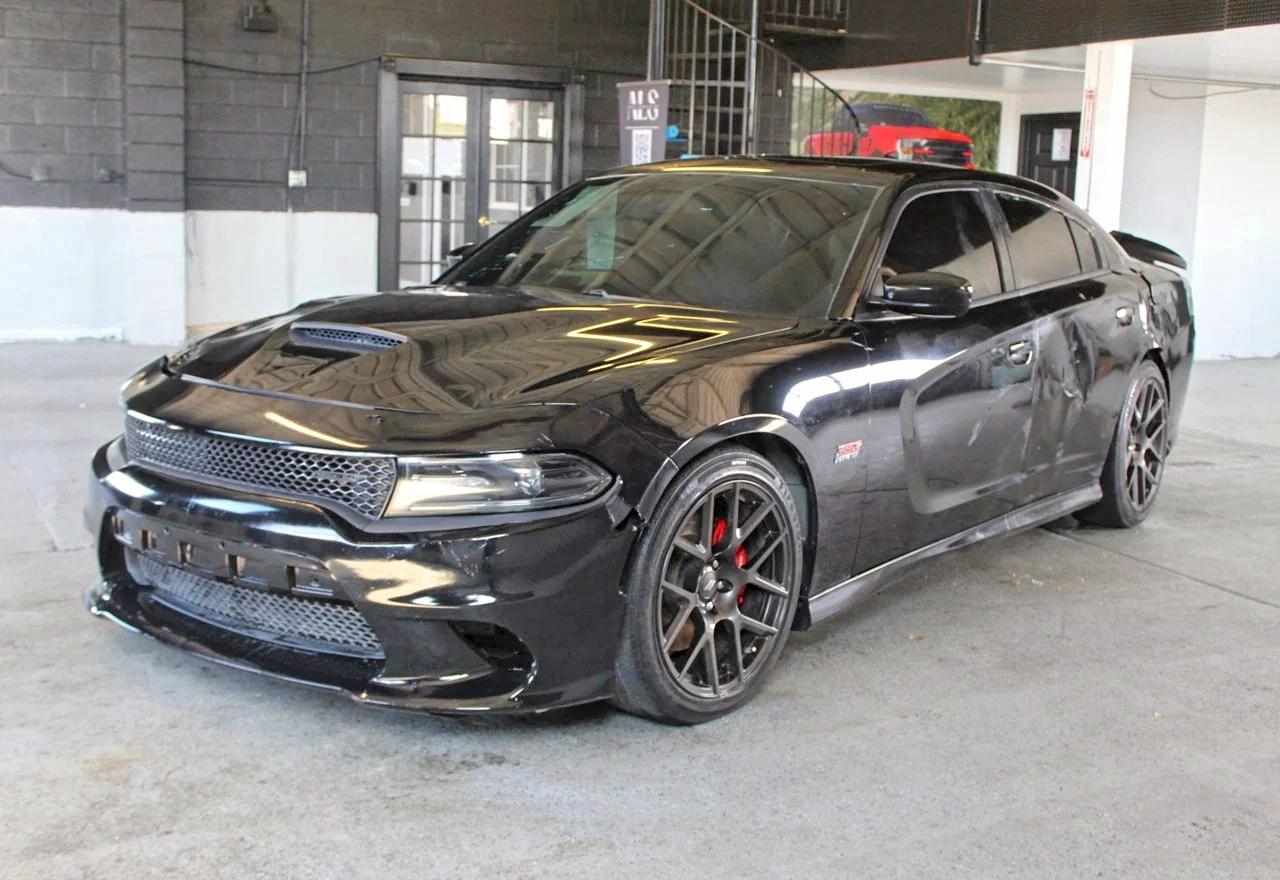
The auction record identifies this vehicle as having a salvage title and lists the primary damage as “ALL OVER.” Stage 1 reports that the photos show substantial, localized side-body damage and deployed airbags, while the roof, glass, and most other exterior panels appear largely intact. Stage 1 therefore states that the visible evidence does not support an all-over or rollover damage pattern. The salvage-title status cannot be confirmed from the photos.
The main visible damage is concentrated along the side of the vehicle. The front and rear door panels have multiple broad, deep dents and sharp creases, with irregular surfaces and distorted reflections. The front door and adjacent side panel are substantially deformed, and the rear door and rear quarter panel have pronounced damage above and forward of the rear wheel. The driver’s steering-wheel airbag and a side-curtain airbag near the front cabin door opening are visibly deployed. Airbag-system replacement, inspection of the restraint system, and verification of related structural and electrical components will be required.
According to the VIN decode, this is a 2017 Dodge Charger R/T 392 sedan with rear-wheel drive, a 6.4-liter gasoline V8 rated at 485 hp. It was manufactured by FCA Canada at the Brampton Assembly plant in Canada.
The supplied NHTSA recall data lists several campaigns for this model range. Campaign 18V332000 concerns wiring that could prevent cruise control from disengaging. Campaigns 18V281000 and 17V097000 concern front driveshaft or driveshaft-bolt issues on specified all-wheel-drive vehicles; this vehicle is decoded as rear-wheel drive. Campaign 17V496000 concerns engine-oil-cooler hoses on specified 2017 Charger and Challenger vehicles equipped with Hellcat engines. Applicability to this specific VIN and completion of any required repairs should be confirmed with an authorized Dodge dealer.
The findings document significant collision damage and deployed safety restraints, but they do not establish the condition of the engine, transmission, chassis, suspension, steering, braking system, wiring, or vehicle underbody. A comprehensive physical inspection and repair estimate are recommended before purchase.
Generated from auction photos by AI vision, then written up by an AI model. Findings are qualitative, not a certified inspection.